Friday, June 10, 2016

Hardly Remembered: Shanghai's Jazz Era In The 1920s

What comes to your mind when you hear the phrase, jazz music? For most people, images of saxophones and nightclubs come into mind – and gently, ever so sweetly, my favorite city of New Orleans. What does not come into mind is Shanghai. There was a brief period however, when the Chinese embraced jazz music as their own. Lasting only a decade, and beginning in the 1920s, people in Shanghai were fascinated by the rhythmic sounds of jazz. The citizens decided to incorporate the sultry African beats with their own beautiful Oriental sounds. 

http://cdn2.gbtimes.com/cdn/farfuture/KU4CYApeexYUjKE_SDnDnDqJr-Shrw0Tv4ul_7a5Fqg/mtime:1464609452/sites/default/files/styles/social_media_image/public/2016/05/30/shanghai-old-jazz.jpg?itok=CtQkkqRZ
Image Source: gbtimes.com
Jazz was introduced in China at the start of the 20th century due to the influx of foreign tourists who decided to come. At the time, Shanghai was considered the glowing jewel of the country – most tourists decided to stay there. It wasn’t a surprise then that foreign influences were brought in as well. Jazz came in at an opportune time as China was adamant about becoming more Western. It was during this time that Shanghai’s film industry was booming. Many Chinese actors were embracing Western traditions quite easily and were asking directors to put them on film. 

As in the West, jazz’s introduction to the silver screen was not initially accepted. Many people found the music too garish and claimed that it would affect Chinese morals. Parents were particularly worried about jazz’s influence on their children – what with the concept of men and women dancing with each other in a provocative manner. It didn’t help that jazz music also spread among the lower-class areas, being played in cabarets and clubs, where prostitution was rampant. 

http://i.telegraph.co.uk/multimedia/archive/01753/shanghai2_1753696c.jpg
Image Source: telegraph.co.uk
In the end, many Chinese believed that jazz music was not meant for them and eventually the trend faded away. 

My name is Christopher Keehner and I am a passionate jazz enthusiast and historian. I spend my time learning new things about jazz and posting them on this Facebook page.

Tuesday, May 31, 2016

A Versatile Weapon For The Eagles: Byron Marshall Signs With Philly

Image source: usatoday.com
After the 2016 NFL Draft, the Philadelphia Eagles drafted Byron Marshall. The Eagles chose the undrafted 5-f00t-9 rookie free agent from Oregon because of his play-making ability. They also chose Marshall because of his versatile playing style.

During the four years Marshall played for Oregon, he alternated between a running back and a wide receiver. His ability to play many positionsis something that the NFL does not see very often. Moreover, he is noted for being an unselfish player. He always puts his team first. That is probably why Marcus Mariota made him his go-to guy.

It was actually a surprise that Marshall went undrafted because he clearly has so much potential. It can even be said that he is one of the highest-grade players in the Oregon roster. Marshall probably stayed undrafted because the other teams do not have a system where a talent like him is utilized. In the past, there were other unique players just like him who had trouble finding their place in the league.

Image source: axs.com
Despite the apprehensions, Marshall is still a great talent and can become a focal point who could greatly benefit the franchise. He is being signed up as a running back in the Eagles because of his solid screen game and third down runs like draws. Marshall is also very good in returning kickoffs as well as being the lead blocker for the kick returner.

Stay updated with everything about the Philadelphia Eagles. Follow me on Twitter. Christopher J. Keehner here.


Friday, May 6, 2016

Top 9: The Best Philadelphia Phillies Players

Last season was not the best time to be a Phillies fan, with the team finishing with the worst record in the 2015 Major League Baseball season and missing out on the playoffs for the fourth straight time. After bottoming out last year, there is no way but up for the team (fingers crossed!). And it does seem that the team is heading in that direction after five weeks of baseball! Contending for a division title looked like a farfetched idea just a couple of months ago. As we watch Phillies fight hard to make the playoffs this season, let us look back at the all-time best Phillies player at each position.

 Pitcher – Steve Carlton: A four-time Cy Young winner, the lefty won 329 games throughout his career, and pitched the Phillies to the World Series title in 1980.

Image source: visitphilly.com
Catcher – Mike Lieberthal: The Phillies do not have many prolific names to play the catcher position, but Lieby is the best among them, providing solid offense to the Philly teams he was in.

First baseman – Ryan Howard: One of the game’s greatest sluggers, the 2006 MVP hit home runs at a historic pace and helped the team to a championship in 2008.  

 
Image source: nytimes.com

Second baseman – Chase Utley: Utley was a great guy on and off the field. He hit the home runs when it mattered and tugged the heartstrings where it matters as an animal activist.  

Shortstop – Jimmy Rollins: Rollins, who, together with Howard and Utley, was part of the potent infield triumvirate, was touted by many as the best Phillies shortstop ever. He was a picture of consistency and even won the MVP in 2007.  

Third baseman – Mike Schmidt: There’s no question here that this position will be occupied by Schmidt, who for fans was the best Phillies player ever – gave the team its first ever World Series title – and probably the greatest third baseman of all time.

Left field – Ed Delahanty: Big Ed is one of baseball’s first power hitters, making batting records even before the 20th century started.

Center field – Richie Ashburn: The outfielder-turned-broadcaster never turned heads with power hitting, but his accurate batting gave him 2,500 hits in 15 years of play.

Right field – Sam Thompson: At 6’2”, he was one of the larger players back in his day. He produced runs like no other player did, defended well and ran fast, making him a complete player.

Christopher J. Keehner avidly supports Philadelphia sports team, particularly the Eagles and Phillies. To know more about what he is passionate about, subscribe to his website.

Monday, March 14, 2016

Music Legacies: How Jazz Influenced Modern Hip-Hop

Image Source: mixcloud.com
Most people fail to realize the influence of jazz music in the development and flourishing of modern hip-hop. Today, jazz has the reputation of being "the music for the oldies;" pictures of seedy cafes and elderly people chain-smoking come to mind. This is an unfair imagery as it completely disregards why and how jazz started in the first place

During the early 1900s, the music was rigid and singular. People were not allowed to dance or listen to “inappropriate” music. However, in the state of New Orleans, a new rebellion was forming; an interesting twist of European melody and East African rhythm. This unique blending of style and music would eventually become known as jazz. As one can imagine, this was not accepted by the majority. But it served as a rallying point for disillusioned youth; a sort of energetic rebuttal to what was musically acceptable at the time.

Does this sound vaguely familiar?

Image Source: pinterest.com
Eventually, of course, jazz became so popular that the entire nation began to embrace it as its own. Jazz was no longer the music of rebellion or youth, but of the establishment. Today’s modern hip-hop sounds with its unpoetic poetry and discordant tones reminds us of youth’s rebellion once more. It reminds society that there will always be non-conformists and that each generation finds its own voice through different melodies. Jazz was the voice of my youth, hip-hop is the sound of yours.

This is why it has become extremely important for people past the age of 60 to remind the young of the importance of jazz; how it serves as the foundation for musical rebellion. This, hopefully, would lead to a shift in how people view the genre. Christopher J. Keehner believes that New Orleans jazz has played an important part in musical growth. Learn more about his passion by following this Twitter account.

Tuesday, February 16, 2016

The Difference in Hearing Jazz on the Streets of New Orleans

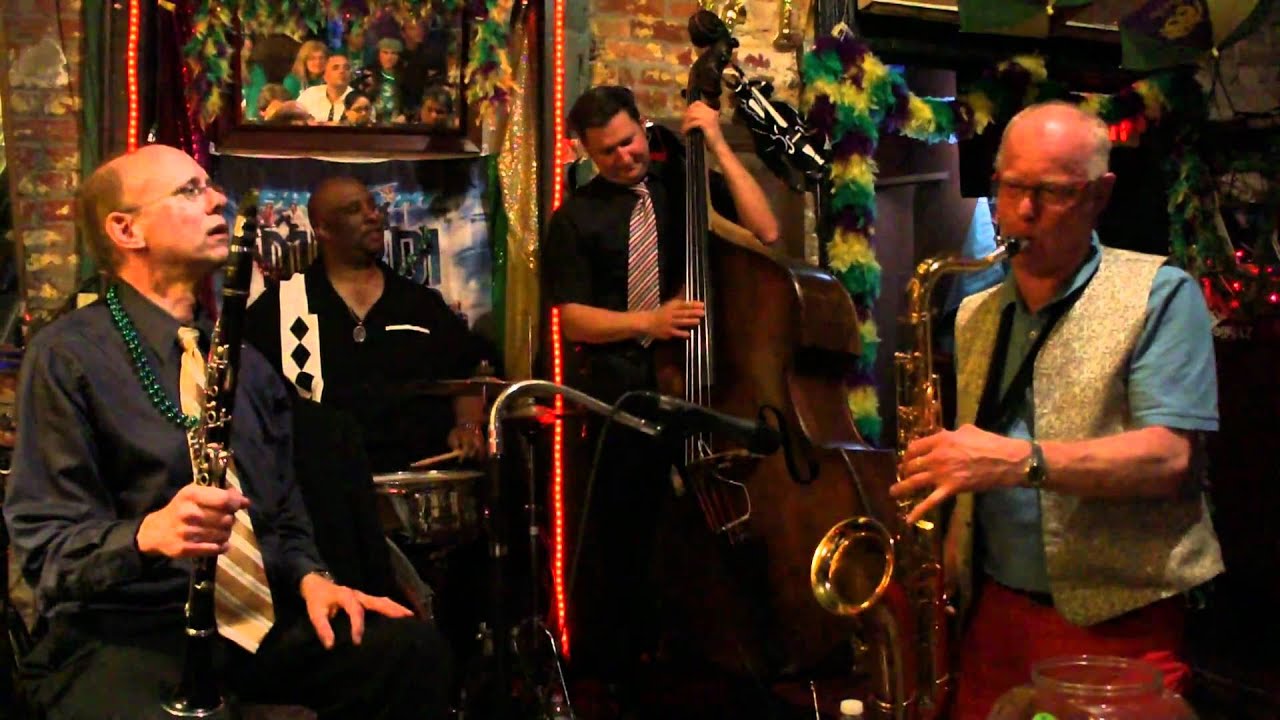
One of my dreams is hearing a live jazz band on the streets of New Orleans. All of my friends who have experienced this tell me that there is a subtle but incredibly distinct difference between hearing something on a disc and seeing it live. Additionally, there is an added meaning to hearing music from its actual birthplace.

https://i.ytimg.com/vi/Cpr8avikWws/maxresdefault.jpg
Image source: youTube.com

New Orleans has always been considered the "birthplace" of jazz. It was where Eastern Africans incorporated their sensual beats with the rather rigid conformity of European music. Jazz was born from two different parents, and what a child it was! Not only did it introduce a new level of sound but completely broke the boundaries between interracial and gender relations. Whites and blacks were seen grooving to the same sound, and women suddenly were encouraged to dance with men. It was an exciting period, an age of rebellion. Sometimes I find it funny how younger adults claim jazz to be the music of the old when it really should be likened to what rap or hip-hop is today. It was something new and dangerous at the time. In fact, it was considered to be highly dangerous when it was born.

Hearing this all in its homeland is a dream I will soon fulfill. As cliché as this sounds, I truly believe that the spirit of music does linger in the place where it began. To be sure, hearing a live jazz band anywhere is thrilling, but I do not doubt that there is something brilliant about hearing it on the streets where it all began.

http://www.visittheusa.com/~/media/0211cfcddc0c411f844f9102d992eeda/band.jpg?w=1046&h=380&bg=ffffff
Image source: visittheusa.com

Christopher J. Keehner here. I simply love jazz. There is no other way to describe how I feel other than sincere and genuine love. Learn more about my passion by following me on Twitter.

Tuesday, January 12, 2016

The Role New Orleans Played In Jazz Music

Image source: wikimedia.org 
Each musical genre has its own history, but one of my favorites is that of jazz music. For me, nothing exemplifies an epic cultural revolution than the one begot by jazz. Allow me to explain.

During the late 19th century, the city of New Orleans was undergoing a musical shift. While the rest of the country was moving toward solid military marches, New Orleans was being heavily influenced by the voodoo rhythms brought on by migrants from East Africa. It was in this state where New World slaves were allowed to own and play their own instruments, typically drums. Not only were voodoo rituals openly practiced, but they were also well attended by both the rich and poor. Thus, European-styled sounds began mixing and blending with African drums. A new musical sound was created, and it was christened “jazz." People were enthusiastic about it; jazz was incredibly different from what everyone else was listening to. It was music that people could dance to – and dance they did.

Image source: louisanatravel.com
I find it beautiful that the spirit of jazz has lived on in New Orleans. When I do get the chance to visit it, I am always struck by how unchanged the place seems. The people are lively, and it always feels that there is something worth celebrating. As the birthplace of jazz, New Orleans also produced the most well-known groups and singers that personify the genre. And while there is a debate on when jazz officially started, whether it was in 1895 with Buddy Bolden or in 1917 with Nick LaRocca and his Dixieland Jazz Band, all musical experts will agree that without New Orleans’ tolerance during the late 19th century, jazz would have never been born. We should all be grateful for that.

Christopher J. Keehner here. I am an avid jazz fan and love learning new things about my favorite musical genre. Learn more about my passion by following me on Twitter.

Monday, December 21, 2015

To the Moon: Celebrating 100 Years of Frank Sinatra

Legends will never be forgotten. Frank Sinatra was, indeed, one of the best musicians that marked an impact on the hearts of many. The songs he wrote and sang stirred the emotions of his listeners. As the whole world marked his centennial birth anniversary, artists from different musical backgrounds came together to give him the tribute he deserves.

Francis Albert “Frank” Sinatra was born on Dec. 12, 1915 in New Jersey. Sinatra first released his solo album entitled “The Voice of Frank Sinatra” in 1946. His music was well received and loved by many—regardless of the people’s preference for genre.

Image source: alux.com
He was a total performer—he charmed his audience with marvelous singing style and tap dancing skills. He also played instruments and starred in many different musicals and movies. His talent was never unnoticed, as he was able to bag three Golden Globes and 13 Grammys in his lifetime. Because of his massive contribution to American pop culture and the music industry, he was given a number of honorary doctorate degrees, a Kennedy Center honor, a Presidential Medal of Freedom, as well as an Order of Merit awarded by the Italian government.

Image source: allmusic.com
To celebrate Sinatra’s wonderful years, people paid tribute to the musical legend by releasing centennial albums, concerts, as well as TV specials, keeping his memory alive.

Christopher J. Keehner here. Learn more about my passion for jazz music when you connect with me on Google+.